
India’s Tourism Sector: Driving Economic Growth and Global Recognition
India’s Tourism Sector: Driving Economic Growth and Global Recognition
Introduction
India is one of the world’s most diverse and fascinating travel destinations, offering a unique blend of history, culture, spirituality, nature, adventure, and modern healthcare. From the snow-capped Himalayas in the north to the pristine beaches of the south, from ancient temples and UNESCO World Heritage Sites to vibrant metropolitan cities, India provides unforgettable experiences for every traveller.
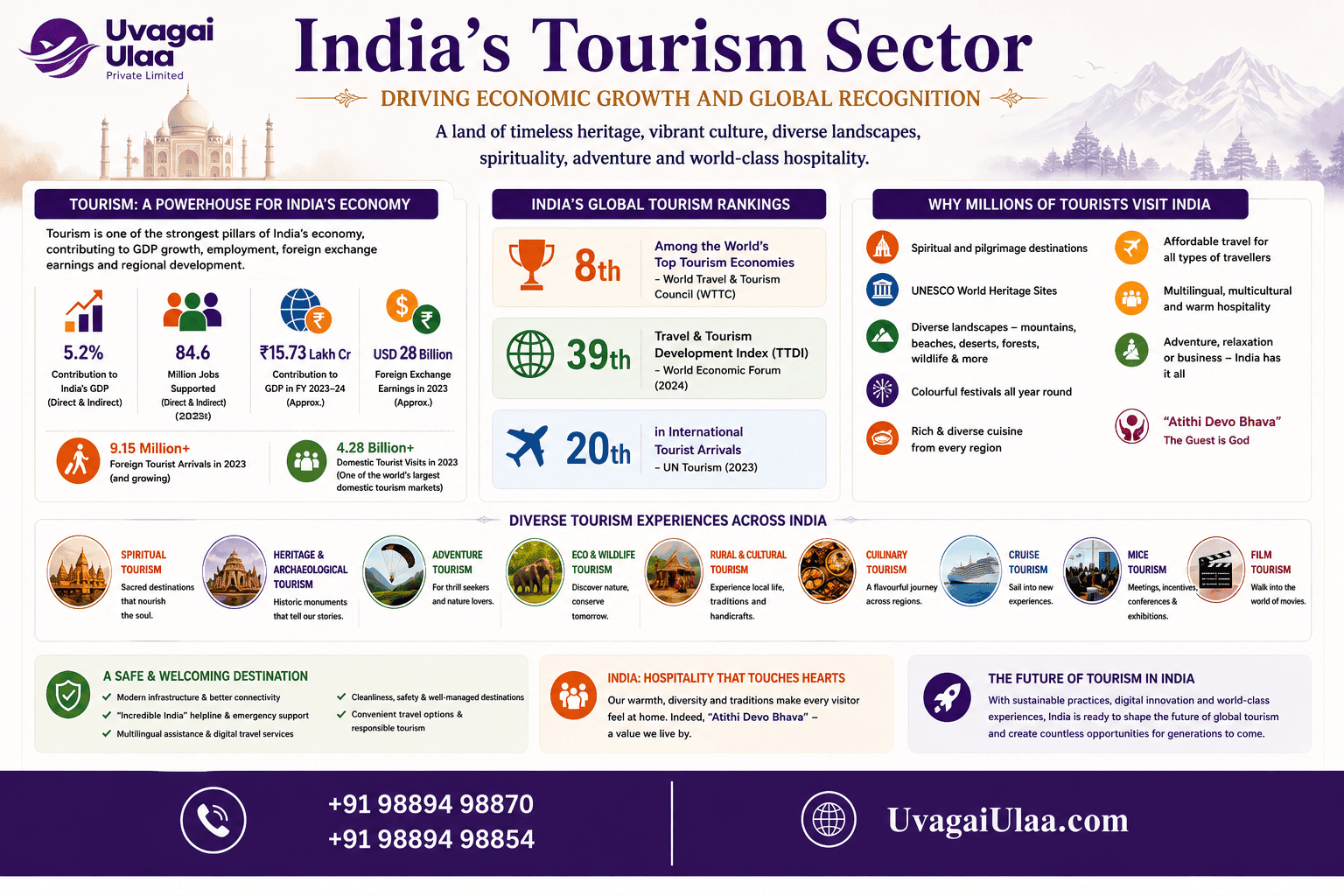
Tourism has become one of the strongest pillars of India’s economy, contributing significantly to GDP growth, employment, infrastructure development, and foreign exchange earnings. As the country continues to invest in transportation, digital services, hospitality, and tourism infrastructure, India is attracting millions of domestic and international visitors every year.
Today, India is recognised globally not only for its rich cultural heritage but also for its rapidly growing medical tourism, wellness tourism, eco-tourism, and adventure tourism sectors. The country’s diverse tourism offerings make it one of the most attractive destinations for travellers seeking authentic experiences.
Tourism’s Contribution to India’s Economy
The tourism industry plays a vital role in India’s economic development. It generates substantial revenue, creates millions of employment opportunities, supports local businesses, and encourages investments across multiple sectors, including transportation, hospitality, retail, handicrafts, and entertainment.
The Government of India continues to strengthen the tourism industry by investing in modern airports, highways, railway networks, digital tourism platforms, destination development, and heritage conservation. Initiatives such as improved visa facilities, better connectivity, smart tourism projects, and destination marketing have made travelling across India easier than ever before.
Tourism also contributes significantly to regional development by creating income opportunities in rural and remote destinations, encouraging entrepreneurship, and preserving traditional arts, crafts, and cultural practices.
Why Millions of Tourists Visit India
India offers experiences that cannot be found anywhere else in the world. Every region has its own language, traditions, architecture, cuisine, festivals, music, and lifestyle, making every journey unique.
Some of the key reasons why travellers choose India include:
* Ancient temples, mosques, churches, monasteries, and sacred pilgrimage destinations.
* UNESCO World Heritage Sites showcasing thousands of years of history and architecture.
* Diverse landscapes including mountains, deserts, forests, waterfalls, islands, beaches, and wildlife sanctuaries.
* Colourful festivals that celebrate India’s multicultural traditions throughout the year.
* Rich culinary experiences featuring hundreds of regional dishes and authentic local flavours.
* Affordable travel options suitable for backpackers, families, luxury travellers, and business visitors.
* Warm hospitality that reflects the Indian philosophy of Atithi Devo Bhava (The Guest is God).
Whether travellers seek spirituality, adventure, culture, relaxation, or business opportunities, India offers something for everyone.
India’s Growing Medical and Wellness Tourism
India has emerged as one of the world’s leading destinations for medical tourism. Patients from Asia, Africa, Europe, the Middle East, and other regions travel to India for high-quality medical care at affordable costs.
The country is home to internationally accredited hospitals, highly qualified doctors, advanced medical technology, and specialised treatments in cardiology, orthopaedics, oncology, organ transplantation, fertility treatment, cosmetic surgery, and more.
In addition to modern healthcare, India is internationally recognised for its wellness traditions. Yoga, Ayurveda, Siddha, Naturopathy, and holistic healing therapies attract thousands of international visitors seeking physical, mental, and spiritual well-being.
This combination of modern medicine and traditional wellness practices makes India a preferred destination for health and wellness tourism.
Diverse Tourism Experiences Across India
One of India’s greatest strengths is the diversity of tourism experiences it offers.
Spiritual Tourism
India is the birthplace of several major religions and is home to countless temples, churches, mosques, monasteries, gurudwaras, and sacred rivers. Destinations such as Varanasi, Rameswaram, Tirupati, Bodh Gaya, Amritsar, Velankanni, and Kedarnath attract millions of pilgrims every year.
Heritage and Archaeological Tourism
Historic monuments like the Taj Mahal, Red Fort, Qutub Minar, Hampi, Konark Sun Temple, Mahabalipuram, and many other archaeological sites showcase India’s rich civilisation and architectural excellence.
Adventure Tourism
Adventure enthusiasts can enjoy trekking in the Himalayas, river rafting, skiing, mountaineering, scuba diving, paragliding, desert safaris, and wildlife expeditions across different regions of India.
Eco and Wildlife Tourism
India’s national parks, tiger reserves, biosphere reserves, mangrove forests, hill stations, and biodiversity hotspots attract nature lovers from around the globe. Sustainable tourism initiatives continue to promote environmental conservation while supporting local communities.
Rural and Cultural Tourism
Traditional villages allow visitors to experience local lifestyles, handicrafts, folk music, dance, agriculture, and authentic regional cuisine. These experiences provide a deeper understanding of India’s cultural diversity.
Culinary Tourism
Indian cuisine is one of the country’s greatest attractions. Every state offers unique dishes, flavours, spices, sweets, and street foods that reflect its history and traditions, making culinary tourism increasingly popular among international travellers.
MICE, Cruise, and Film Tourism
India is also expanding its Meetings, Incentives, Conferences, and Exhibitions (MICE) sector through world-class convention centres and business infrastructure. Cruise tourism is growing along India’s extensive coastline and inland waterways, while film tourism continues to attract visitors to famous filming locations featured in Indian and international cinema.
A Safe and Welcoming Destination
India continues to improve the overall travel experience through better tourism infrastructure, enhanced transportation, multilingual visitor assistance, digital travel services, emergency support systems, tourist police, and improved destination management.
Major tourist destinations are becoming increasingly accessible with modern airports, improved road networks, organised visitor facilities, and better accommodation options. Hospitality remains one of India’s greatest strengths, ensuring visitors feel welcomed throughout their journey.
The Government and tourism stakeholders continue to focus on sustainable tourism practices, cleanliness, safety, heritage conservation, and responsible tourism to enhance visitor confidence and satisfaction.
The Future of Tourism in India
India’s tourism industry continues to evolve with changing traveller preferences and technological advancements. Sustainable tourism, digital innovations, wellness travel, luxury experiences, eco-tourism, and experiential tourism are expected to shape the future of the sector.
With continued investments in infrastructure, heritage conservation, skill development, and destination promotion, India is well positioned to strengthen its global tourism presence. As international travel continues to grow, India offers an unmatched combination of history, spirituality, culture, nature, healthcare, cuisine, and hospitality.
Tourism is more than an industry—it is a bridge that connects people, cultures, and economies. By preserving its rich heritage while embracing innovation, India continues to inspire millions of travellers and reinforce its position as one of the world’s most remarkable travel destinations.