
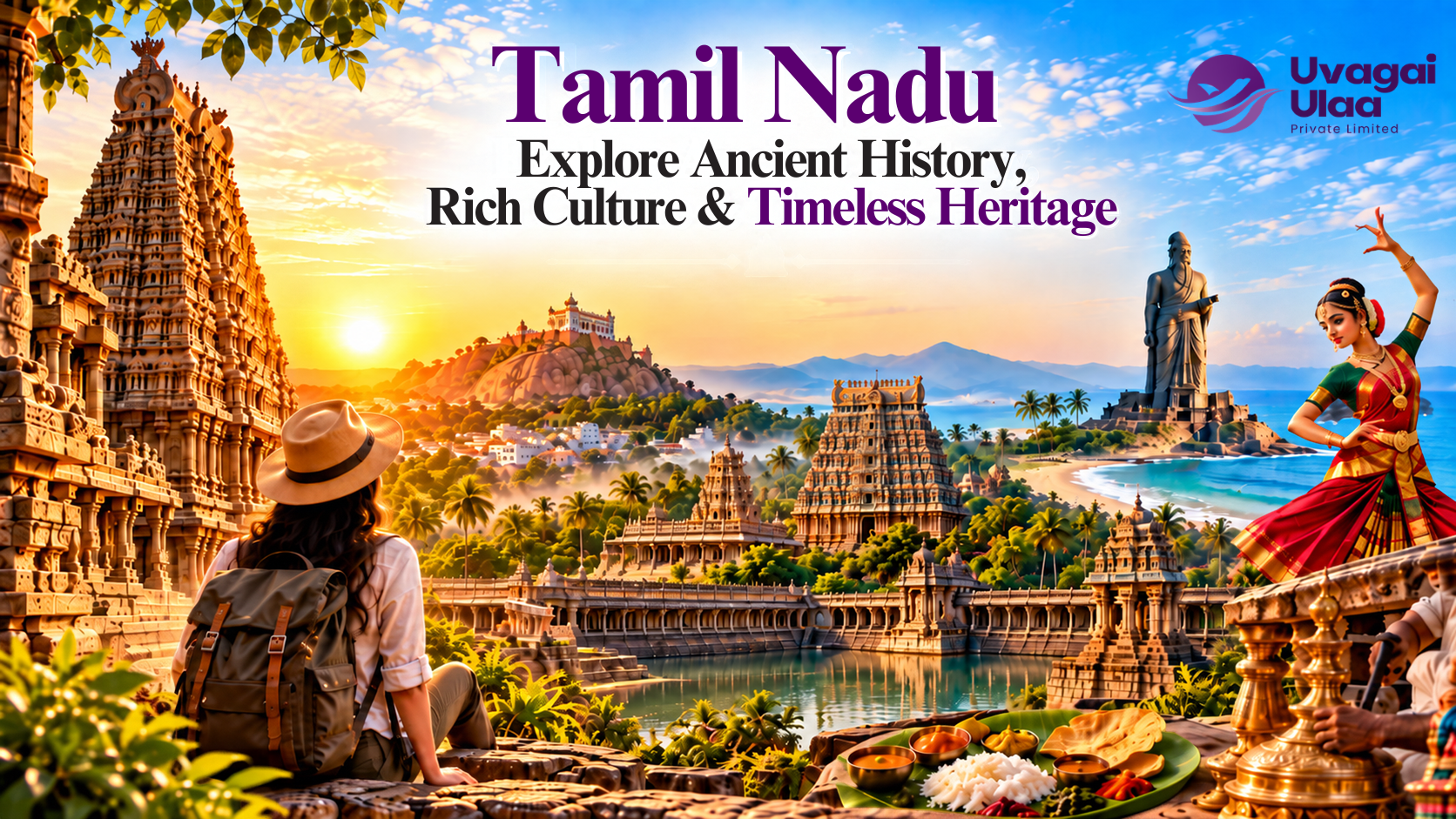
Tamil Nadu: Explore Ancient History, Rich Culture & Timeless Heritage
Tamil Nadu: Explore Ancient History, Rich Culture & Timeless Heritage

A Living Cultural Civilisation
When people think about India, they often imagine colourful festivals, ancient monuments, diverse cuisine and spiritual traditions. But there is one region where all these experiences come together in an extraordinary way—Tamil Nadu. Located in southern India, Tamil Nadu is far more than a destination filled with temples. It is a land shaped by thousands of years of history, a rich language, extraordinary craftsmanship, distinctive cuisine and traditions that continue to be part of everyday life. For international travellers, Tamil Nadu offers the rare opportunity to experience a culture where the past is not simply preserved—it is still alive. Ancient temples continue to function as places of worship, artisans continue to practise traditional crafts, farmers continue to cultivate the ingredients behind regional cuisine, and Tamil continues to connect generations.
Tamil – A Language with Ancient Heritage
One of the strongest identities of Tamil Nadu is its language—Tamil. Tamil has one of the world’s longest continuously documented literary and inscriptional traditions, with Tamil-Brahmi inscriptions dating from around the 3rd century BCE. Over centuries, Tamil literature, poetry, inscriptions and cultural traditions have created a remarkable connection between language and identity. For a foreign traveller, learning even a few Tamil words can make the journey more personal, opening opportunities to connect with local people and understand their hospitality. Tamil is therefore more than a language; it is a living link between ancient Tamil civilisation and modern Tamil Nadu.
Keeladi – Discover Ancient Tamil Life
Tamil Nadu is a fascinating destination for archaeology lovers, and Keeladi, near the Vaigai River, is one of its most important archaeological sites. Evidence from Keeladi points towards an organised settlement dating to around the 6th century BCE, offering insights into settlement patterns, craft production, writing and everyday life. Instead of seeing only grand monuments, travellers can discover evidence connected with ordinary people—how they lived, worked, produced goods and communicated. This makes Keeladi particularly meaningful because archaeology becomes a way of discovering the people behind the objects.
Mamallapuram – When Stone Became Art
During the 7th and 8th centuries CE, the Pallavas transformed the landscape of Mamallapuram through extraordinary rock-cut architecture and sculpture. Massive stones were carved into temples, cave sanctuaries, monolithic rathas and monumental bas-reliefs. The famous Descent of the Ganges, also known as Arjuna’s Penance, demonstrates how ancient craftsmen transformed natural rock into detailed artistic narratives. Important places to explore include Pancha Rathas, Shore Temple and the Descent of the Ganges. For international travellers, Mamallapuram reveals the fascinating relationship between architecture, religion, storytelling, nature and sculpture.
Chola Architecture – The Magnificence of the 11th Century
Tamil Nadu’s architectural heritage reached another remarkable level during the Chola period. The Brihadisvara Temple at Thanjavur, constructed in the 11th century CE under Rajaraja Chola I, stands as one of the greatest achievements of South Indian temple architecture. The Chola architectural tradition continued through magnificent monuments such as Gangaikondacholapuram and Airavatesvara Temple at Darasuram, representing extraordinary achievements of the 11th and 12th centuries CE. These temples are not merely religious destinations; they are open-air lessons in architecture, engineering, sculpture, mathematics, history and culture.
Ancient Sculptures & Divine Icons
Tamil Nadu is renowned for its extraordinary sculptural heritage. Ancient craftsmen created detailed sculptures of deities, animals, mythical figures, kings and scenes connected with everyday life. Stone sculptures can be found throughout historic temples, while the bronze tradition represents another exceptional chapter in Tamil artistic history. The Chola bronze tradition, particularly prominent between approximately the 10th and 13th centuries CE, produced some of the world’s most admired sacred sculptures. Among them, the **Nataraja**, the cosmic dancer, is especially famous for combining movement, symbolism, balance and artistic precision. These sculptures demonstrate how deeply art, spirituality and craftsmanship became connected in Tamil culture.
The Lost-Wax Bronze Tradition
One of Tamil Nadu’s remarkable traditional techniques is lost-wax bronze casting. The process requires exceptional skill, precision and an understanding of proportions and form. Knowledge of this craft was passed from one generation of artisans to another, and traditional bronze-casting communities continue to preserve the technique today. For cultural travellers, visiting an artisan workshop can therefore be as meaningful as visiting a historic monument because it allows them to see how a centuries-old tradition continues to be practised by skilled human hands.
Temples – Living Heritage
Tamil Nadu is home to thousands of temples representing different periods of South Indian history and architecture. What makes many of them special is that they remain active places of worship. Travellers can experience temple architecture, stone sculpture, traditional rituals, festivals, music, flower decorations, local markets and community celebrations. Some important temples to explore include Meenakshi Amman Temple in Madurai, Sri Ranganathaswamy Temple in Srirangam, Ramanathaswamy Temple in Rameswaram and Chidambaram Nataraja Temple. These are not monuments frozen in the past; they remain part of everyday cultural life.
Tamil Nadu Cuisine – Taste the Culture
A journey through Tamil Nadu is incomplete without experiencing its food. Every region has developed distinctive flavours, ingredients and cooking traditions. Travellers can discover Chettinad cuisine, Kongunadu cuisine, coastal seafood, Madurai specialities and Thanjavur-region cuisine, each offering a different expression of Tamil food culture. Traditional dishes such as idli, dosa, pongal, sambar, rasam, appam, adai, millet preparations, traditional rice varieties, seafood, sweets and filter coffee create an extensive culinary journey. A traditional meal served on a banana leaf can itself become a memorable cultural experience.
From Farm to Plate
Tamil cuisine is deeply connected with agriculture. Rice has historically been an important staple, while millets, pulses, vegetables, fruits, coconut, sugarcane and spices also contribute to the region’s food traditions. For international travellers, visiting a farm or local market can reveal the story behind a traditional meal. The experience can be understood as a simple journey: **Farm → Harvest → Local Market → Traditional Kitchen → Cooking → Banana-Leaf Meal**. Food then becomes more than something to eat; it becomes a story about land, agriculture, people and tradition.
Traditional Crafts – Culture Made by Hand
Tamil Nadu’s cultural richness can also be experienced through traditional manufacturing and craftsmanship. Visitors can explore Kanchipuram silk weaving, Thanjavur painting, Swamimalai bronze casting, stone sculpture, pottery and palm-leaf crafts. Each represents knowledge and skills passed down through generations. Meeting artisans and watching them work gives travellers an opportunity to understand the human effort behind traditional products rather than simply purchasing them as souvenirs.
Villages, Festivals & Everyday Life
Some of the most meaningful experiences can be found outside major tourist attractions. Tamil villages offer opportunities to understand agriculture, traditional cooking, handloom weaving, pottery, local markets, temple festivals and community life. Festivals make this cultural experience even more vibrant. Pongal, the traditional harvest festival, beautifully connects agriculture, nature, cattle, family and food. Travelling during festival periods allows international visitors to experience traditions through colours, music, food and community celebrations.
Music, Dance & Cultural Expression
Tamil Nadu’s heritage extends beyond architecture, archaeology and food. Bharatanatyam, one of India’s most recognised classical dance forms, has deep connections with Tamil cultural traditions. Classical music, temple traditions and folk performances allow travellers to experience culture through rhythm, movement and storytelling. A complete cultural journey therefore means seeing the architecture, hearing the music, watching the dance, tasting the food and meeting the people.
Nature Beyond Heritage
Tamil Nadu also offers remarkable natural diversity, from the Western Ghats and hill stations to beaches, forests, waterfalls, wildlife and agricultural landscapes. This allows travellers to combine culture, history, food, nature and relaxation in a single journey. The variety of landscapes makes Tamil Nadu suitable for different kinds of travellers, whether they are interested in heritage, nature, food, spirituality or local experiences.
Why Every Traveller Should Experience Tamil Nadu
Tamil Nadu brings together many forms of travel within one cultural landscape. History lovers can explore ancient kingdoms; archaeology enthusiasts can discover Keeladi; architecture lovers can admire Pallava and Chola monuments; art lovers can explore stone and bronze sculptures; food lovers can experience regional cuisine; craft enthusiasts can meet traditional artisans; spiritual travellers can visit living temples; and nature lovers can explore mountains, forests and beaches. This diversity makes Tamil Nadu much more than a sightseeing destination.
A Journey Through Thousands of Years
Tamil Nadu can almost be experienced as a journey through time. 6th century BCE archaeological evidence provides insights into early Tamil life, while 3rd century BCE Tamil-Brahmi inscriptions demonstrate the antiquity of the written Tamil tradition. The 7th and 8th centuries CE brought remarkable Pallava monuments at Mamallapuram. The 10th to 13th centuries CE saw the flourishing of Chola bronze sculpture, while the 11th and 12th centuries CE produced monumental Chola temples. Yet these traditions are not simply historical memories—they continue through language, temples, food, crafts, festivals, music, dance and community life today.
Tamil Nadu – Where History Still Lives
Tamil Nadu is a destination where the past and present exist side by side. It is a place where an ancient language continues to be spoken, archaeological discoveries reveal thousands of years of human life, temples built centuries ago remain active, traditional crafts continue to be practised, and food remains closely connected with agriculture and community traditions. For travellers searching for something deeper than ordinary sightseeing, Tamil Nadu offers the opportunity to walk through history, taste traditions, meet local people, discover craftsmanship and experience a culture that continues to live.
You don’t simply visit Tamil Nadu. You experience it.
You walk through its history. You taste its traditions. You meet its people. You discover its craftsmanship. You explore its archaeology. And you leave with a story that lasts a lifetime.
Tamil Nadu — Where History Still Lives.
Every Stone Has a Story. Every Dish Has a Tradition. Every Journey Becomes an Experience.