
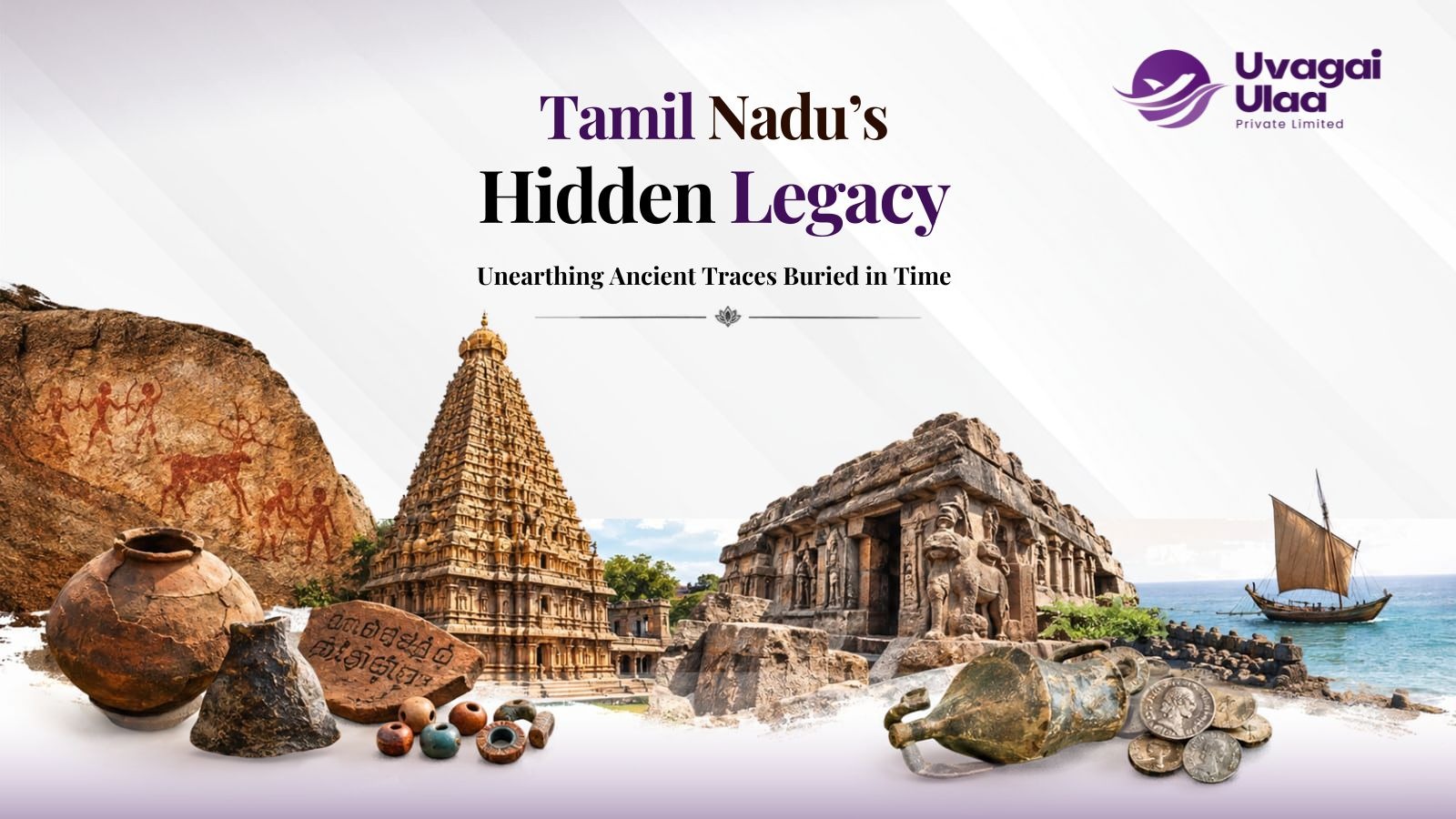
Tamil Nadu’s Hidden Legacy: Unearthing Ancient Traces Buried in Time
Tamil Nadu’s Hidden Legacy: Unearthing Ancient Traces Buried in Time
Come Discover the Places Where Tamil Nadu’s Ancient Stories Still Live
Tamil Nadu is known for its temples, festivals and coastlines. But beyond the familiar attractions lies an extraordinary historical landscape shaped by prehistoric communities, burial traditions, maritime trade, inscriptions, rock art and monumental architecture. These Tamil Nadu archaeological sites span millions of years, from stone tool-makers to Sangam-era ports and the grand temples of the Pallavas and Cholas. Here is a curated selection, not the only heritage sites in the state, but remarkable places that show how deep and diverse Tamil Nadu’s past truly is.
Prehistoric and Iron Age Sites in Tamil Nadu
Attirampakkam: Journey into Deep Prehistory: Located in the Kortallayar River Basin of Tiruvallur district, Attirampakkam is one of South Asia’s important prehistoric sites. Excavations uncovered Acheulian handaxes and cleavers, with the earliest levels dated to about 1.51 million years ago. Later research documents Middle Palaeolithic technologies. Tamil Nadu’s story began long before recorded history.
Mayiladumparai: From Stone Tools to the Iron Age: In Krishnagiri district, Mayiladumparai reveals a remarkably long cultural sequence: microlithic tools, Neolithic material, rock art, Iron Age habitation, megalithic monuments, memorial stones and later inscriptions. The state archaeology programme classifies it as Neolithic, while recent research highlights its wider sequence.
Sembiankandiyur: An Iron Age Landscape: Near Mayiladuthurai, excavations revealed Black-and-Red Ware, Black Ware, Red Slipped Ware, graffiti marks, terracotta and stone objects, and a row of urns. Identified as Megalithic–Iron Age, with habitation around the 1st century BCE, the site shows how even pottery fragments become clues to ancient life.
Ariyalur and Perambalur: A World Older Than Civilisation: These districts take you millions of years further back. The region is famous for ammonites, petrified wood, marine fossils and dinosaur-related discoveries. The Field Fossil Museum at Varanavasi displays fossils from geological periods including the Jurassic and Cretaceous.
Sivagalai: Ancient Burial Traditions: In the Porunai region, Sivagalai is listed as an Iron Age site, with multiple scientific dates from burial contexts. Along with Adichanallur and Korkai, it forms part of the wider Tamiraparani/Porunai archaeological landscape.
Adichanallur: Where Burials Tell Their Story: Known for extensive urn-burial remains, Adichanallur has yielded numerous burial urns, pottery, iron objects and bronze artefacts. Classified as an Iron Age site, it offers rare insight into burial customs and the lives of early southern Tamil communities.
Vasudevanallur: Exploring the Lesser-Known South: In the Tenkasi region, this landscape holds urn-burial sites and ancient iron-related evidence linked to Iron Age and Megalithic traditions. For travellers seeking lesser-known heritage, these quieter landscapes preserve some of the most intriguing traces of the past.
Sangam-Era Settlements, Ports and Inscriptions
Keeladi: An Ancient Urban Settlement: Near the Vaigai River in Sivaganga district, Keeladi is an Early Historic settlement associated with the Sangam Age, with scientific dating around the 6th century BCE. Finds include Tamil-Brahmi-inscribed pottery, brick structures, terracotta ring wells, roofing tiles, beads, iron objects, ornaments and gamesmen, offering clues to everyday life.
Korkai: The Ancient Pearl Route: Korkai was an important port associated with pearl fishery, mentioned in Sangam literature and by classical geographers. Excavations produced Tamil-Brahmi-inscribed pottery and structural remains, revealing the Gulf of Mannar’s ancient maritime economy.
Alagankulam: Tamil Nadu’s Maritime Connections: On the Ramanathapuram coast, Alagankulam yielded Mediterranean pottery, including Rouletted Ware and Amphorae fragments, along with Tamil-Brahmi pottery, beads and Roman coins. These finds show long-distance commercial links with the ancient world.
Poompuhar: An Ancient Maritime City: Poompuhar, or Kaveripoompattinam, was a flourishing port city and an important Chola centre during the Sangam period. The Marine Archaeological Site Museum displays artefacts recovered through onshore and offshore exploration.
Kodumanal: Where Craftsmanship Met Trade: In Erode district, Kodumanal reflects Megalithic and Early Historic phases. Quartz and carnelian beads, iron objects and inscribed, graffiti-marked pottery point to specialised craft production, metalworking and exchange networks.
Mangulam: Early Tamil-Brahmi Inscriptions: Near Madurai, Mangulam is prized for early Tamil-Brahmi inscriptions linked to caves and ancient Jain monastic activity. They offer valuable evidence of writing and the social world of early historic Tamil Nadu.
Jambai: A Link to Sangam-Era History: Near Tiruvannamalai, the Jambai inscription refers to Atiyan Netuman Anci, a celebrated chieftain of the Sangam tradition, and helps explain the title “Satiyaputo.”
Pugalur: Traces of the Ancient Cheras: Near Karur, Pugalur’s Tamil-Brahmi inscription refers to three generations of Chera rulers, offering valuable evidence of early political history.
Karur: A Major Centre of Chera Trade: Known as Vanchi or Karuvur in Sangam literature and inscriptions, Karur yielded Roman coins, precious stones, Rouletted Ware, Amphorae fragments, Tamil-Brahmi pottery, bricks and iron objects, highlighting long-distance trade.
Uraiyur: Walk Through the Early Chola World: In present-day Tiruchirappalli, Uraiyur is traditionally identified as an early Chola capital, dated from around the 3rd century BCE to the 3rd century CE.
Tirukkoilur: A Sangam-Era Historical Landscape: In Kallakurichi district, Tirukkoilur is linked with the Malayaman chieftains of the Sangam age, from roughly the 3rd century BCE to the 3rd century CE. It later became a religious centre for both Saiva and Vaishnava traditions.
Pallava and Chola Architectural Marvels
Trichy Rockfort: History Carved in Stone: Rising above Tiruchirappalli, Rockfort holds Pallava-period rock-cut architecture, including the Lalithankura Pallaveswaram cave temple, along with later temples and inscriptions. Records also connect the hill with Mahendravarman I and later dynasties.
Mamallapuram: The World of Pallava Architecture: The UNESCO-listed monuments at Mamallapuram, also called Mahabalipuram, include rock-cut caves, monolithic rathas, open-air reliefs, structural temples and excavated remains created under Pallava patronage in the 7th and 8th centuries. The Shore Temple and Pancha Rathas showcase extraordinary craftsmanship.
Kanchipuram: Pallava Capital of Temple Architecture: A major Pallava capital, Kanchipuram helped shape Dravidian temple architecture. The Kailasanatha and Vaikunta Perumal temples illustrate the transition from rock-cut experimentation to large structural temples.
Thanjavur: The Grandeur of the Cholas: Built under Rajaraja I, the Brihadisvara Temple is one of the greatest achievements of Chola architecture, with its towering vimana, sculptures, inscriptions and murals. It forms part of UNESCO’s Great Living Chola Temples.
Gangaikonda Cholapuram: An Imperial Capital: Built by Rajendra I, Gangaikonda Cholapuram became the Chola imperial capital in the 11th century. Its Brihadisvara Temple, another UNESCO-listed component, is celebrated for exceptional sculptures, while the wider landscape reveals the scale of the former capital.
Darasuram: Chola Craftsmanship in Detail: Near Kumbakonam, the Airavatesvara Temple, built during Rajaraja II’s reign, is the third Great Living Chola Temple. UNESCO highlights its ornate execution, sculptural detail and distinctive chariot-like front mandapa.
Tamil Nadu’s Heritage Goes Beyond These Places
Rock-art sites such as Kilvalai and Mallachandram, along with many other archaeological and historical centres, are still waiting to be explored. Tamil Nadu’s heritage is not one story but thousands, layered across landscapes, monuments, inscriptions, artefacts and living traditions.
Explore Tamil Nadu’s Heritage with Uvagai Ulaa
At Uvagai Ulaa Private Limited, we believe travelling through Tamil Nadu is about more than visiting famous landmarks. It is about understanding the stories, cultures and architectural traditions behind them. Our Chola–Chera–Pandya–Pallava tour packages, Tamil Nadu heritage tours and curated cultural experiences are designed for travellers who want to discover ancient temples, architectural marvels, historic landscapes and living traditions. Whether your interest lies in archaeology, ancient kingdoms, architecture or Tamil culture, Uvagai Ulaa helps you experience Tamil Nadu through journeys that connect the past with the present.
A Journey Through the Tamil Land
Tamil Nadu is a living historical landscape. Its soil preserves ancient settlements, its rocks hold prehistoric tools and paintings, its burial grounds hold traces of ancient communities, its inscriptions preserve names and stories, its coast remembers maritime trade, and its temples carry centuries of architectural knowledge. So, when planning your next journey, look beyond the usual sightseeing spots. Because in Tamil Nadu, the past is not simply remembered; it is still standing, still being excavated and still waiting to be discovered. Come discover the places where Tamil Nadu’s ancient stories still live