
Tamil Nadu & South India Tours
- contact@kuviyammedia.com
- October 10, 2025
- No Comments
Rameshwaram Pilgrimage Tour From Trichy
Tamil Nadu Temple Tours
The Living Soul of Tamil Nadu – Land of Temples
The temples of Tamil Nadu and the wider South India region are not merely monuments of stone; they are living testimonies of faith, artistic mastery, and communal memory. Travelling through this sacred landscape is to engage with centuries of devotion and cultural depth, and for many, the most resonant way to begin such a journey is on the Rameshwaram Pilgrimage Tour – From Trichy to Temple Town. This pilgrimage is a cornerstone of Tamil Nadu & South India Tours, a mapped route where myth, ritual, and the sea converge. It is a path that invites introspection as much as exploration, and it draws travellers who seek more than sightseeing: they seek immersion, meaning, and a felt connection to a living tradition.
To set out on a south india temple tour is to follow footsteps that echo through millennia. From the earliest Pallava shrines to the grand Chola temples, Tamil architecture tells a story in stone. Each temple, whether high and gilded or modest and mossed with time, holds layers of liturgy, music, and performance. This is why a temple tour tamil nadu is uniquely rewarding: every shrine offers not only visual beauty but also a rhythm of life, with early morning rituals, midday offerings, and night vigils that have been enacted across generations.

Trichy: The Gateway of Faith and the Beginning of Devotion
Your journey often begins in Trichy, a city that works as a gentle threshold between ordinary life and pilgrimage. Srirangam’s vast complex, devoted to Sri Ranganathaswamy, opens the heart with its long corridors and layered sanctums. The Rock Fort and its shrines give a vertical sense of devotion, where climbing to reach a temple becomes a small act of discipline. At Jambukeswarar Temple the element of water is honored, and in its quiet tanks one hears a softer chant of devotion that specializes the temple tour Tamil Nadu experience.
Madurai: Where Goddess and City Breathe as One
Madurai, with its Meenakshi Amman Temple, is often described as the soul of Tamil devotional life. Here the goddess’s presence is woven into the city’s fabric; the market, the music, and the daily rhythms all orbit around the temple. The Meenakshi shrine displays a profusion of sculptural stories across its gopurams, each figure a tableau of myth and morality. Attending a dawn or dusk ritual in Madurai can feel like stepping into an ancient play, where priests, artists, and devotees together keep myths alive.
From Madurai the road to Rameshwaram moves from interior plains toward the coastline, and the transition is palpable. As the land flattens and the wind takes on salt, pilgrims sense they are approaching a place of final reckoning. Rameshwaram’s significance is bound to the Ramayana; here Rama’s worship of Shiva, his remorse and his devotion, are consecrated in stone. For many who join a rameshwaram pilgrimage from Trichy, this arrival marks a profound interior arrival as well.
Rameshwaram: The Island of Faith and the Ocean of Purity
The Ramanathaswamy Temple in Rameshwaram is characterized by its long corridors and its 22 theerthams, wells believed to cleanse sins and to purify the spirit. Walking those corridors, one notices not only architectural detail but also repeated gestures of devotion: the careful offering of flowers, the reverent steps of elders, the small children who run with incense, the elderly who recite mantras. It is ordinary life rendered sacred through ritual. Agni Theertham and the shoreline beyond it remind pilgrims that the sea and temple together complete the circuit of purification.
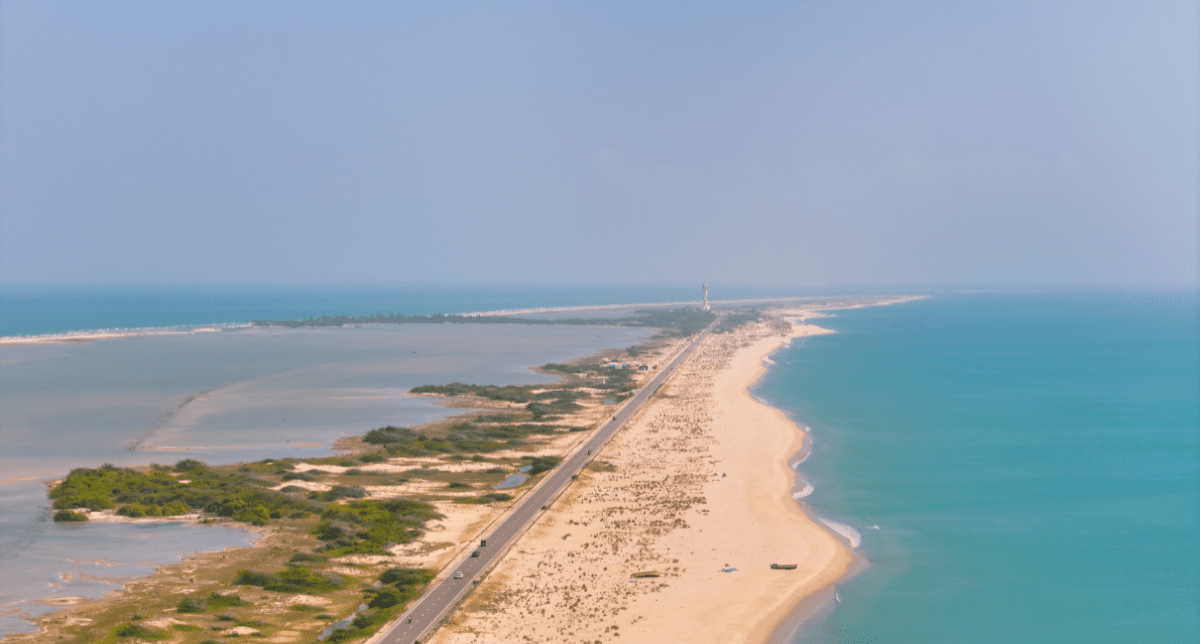
Dhanushkodi stands as a liminal place where memory meets the elements. Once a thriving town, it was devastated by a cyclone and left as a poignant testament to fragility. Pilgrims stand on the ragged coastline and gaze toward the south where legend names the Ram Setu, the chain of shoals that connect India to Sri Lanka. Even for sceptics, the place exerts a hush; the wind, the open sky, and the sound of surf deliver a sense of the eternal.
The Architectural Majesty of South Indian Temples
The architectural language of South Indian temples is refined and rich. Chola bronzes, Pallava stone carving, and Nayak stucco all contribute to a visual vocabulary that has shifted across centuries while retaining coherent spiritual aesthetics. A good south india temple tour will linger over sculpted pillars, examine inscriptions, and listen to guides who bring these aspects to life. The Brihadeeswarar Temple in Thanjavur, the living dance of stone at Chidambaram, and Kanchipuram’s thousand shrines together outline a civilizational map that delights both art lovers and devout pilgrims.
Participating in festivals converts a mere itinerary into a living experience. The Chithirai Festival in Madurai celebrates divine marriage and spills through streets in luminous processions. Maha Shivaratri and Navaratri acquire regionally distinct meanings in temple towns across Tamil Nadu. At Rameshwaram special observances draw folk rituals and classical chants into a single stream of devotion. Witnessing a festival during your south india temple tour gives one an awareness of time and season practiced as communal memory.
Myths matter on this route. Stories of Rama, Hanuman, the building of the bridge to Lanka, and the pursuit of dharma are not merely recited; they are enacted in festivals and reflected in temple iconography. The rameshwaram pilgrimage becomes a narrative pilgrimage: pilgrims are not only visiting a place but also walking into an epic. These myths offer moral and spiritual frameworks that have tended communities for centuries.
A sample itinerary for a deeply felt Rameshwaram Pilgrimage Tour – From Trichy to Temple Town could begin with a morning in Srirangam, where one witnesses sunrise rituals and spends a reflective hour near the temple tanks. Late morning travel leads to Trichy’s Rock Fort and a quiet midday spent at Jambukeswarar. The following day, travel to Madurai allows immersion in Meenakshi’s rituals, a visit to the Nayak palace, and an evening spent listening to temple singers. On the third day travel proceeds to Rameshwaram where pilgrims enter Ramanathaswamy, bathe in theerthams, and perform prayers at Agni Theertham at dusk. The fourth day might be reserved for Dhanushkodi and Gandhamadan Hill excursions before returning toward Trichy or extending the trip to coastal shrines such as Tiruchendur or Kanyakumari.
Practical considerations shape the quality of a pilgrimage. Weather matters: the post-monsoon months between October and March are generally cooler and clearer. Clothing should be modest and suited to temple protocols, and comfortable footwear is wise because many sacred precincts require walking. Hydration and simple health supplies are useful; temples are generally welcoming but sometimes crowded, so patience and gentle politeness will smooth your experience. Arrange accommodations near temple precincts if possible to catch dawn rituals and to feel the rhythm of temple life.
Cultural Essence: Music, Art, and Food along the Pilgrim Path
The cultural life that surrounds temples enriches a south india temple tour. Carnatic music sometimes floats through temple halls at dusk; classical Bharatanatyam may be performed as an offering. Local foods—meals served on banana leaves, regional sweets, and temple prasadam—offer tastes of ritual hospitality. Crafts such as bronze casting in Thanjavur, silk weaving in Kanchipuram, and stone carving in Chettinad provide tactile encounters with skills developed for temple life. These cultural textures make the pilgrimage multi-sensory.
Travel responsibly. Respect temple dress codes, avoid intrusive photography where signs or priests request restraint, and offer donations thoughtfully through official channels. Support local economies by buying craft from artisans and eating at local eateries. When visiting fragile sites like Dhanushkodi, tread lightly — the old town is an ecological as well as historical site. A mindful traveler remembers that temples are houses of faith, not museum exhibits.
Pilgrims often describe one small moment that changed their journey: a chant heard at dawn, a child offering flowers, an elderly devotee’s smile. These moments are the texture of pilgrimage life; they are small but integral. Writing or speaking about the journey after it concludes can help integrate its lessons. Many pilgrims report subtle shifts in priorities, quieter minds, or clearer senses of purpose after returning from a temple tour tamil nadu.
The Rameshwaram Pilgrimage Tour – From Trichy to Temple Town is a composite experience. It is built of architecture, ritual, sea, and story; it relies on durable traditions and contemporary custodians. A well-planned Tamil Nadu & South India Tours package will honor both logistics and devotion, helping pilgrims move with dignity and devotion from one shrine to another. Whether you are a devout follower, a history lover, or a traveler seeking depth, this pilgrimage invites you to slow down and to listen. The temples of Tamil Nadu, from Srirangam to Rameshwaram, form a continuous hymn. To travel them is to join that hymn for a while, and to return with something intact and quietly altered. May your walking be steady, your prayers sincere, and your journey full of discovery.
To understand the temples fully, one must examine the architecture with attention to time, technique, and symbolism. Chola architecture, for example, is famed for its balance and monumental scale; the Brihadeeswarar Temple at Thanjavur stands as a towering assertion of an empire that valued art as devotion. Close observation reveals how proportions were calculated, how the vimana aligns with ritual expectations, and how light was meant to enter to emphasize certain periods of the day. Pallava contributions, visible in Mamallapuram’s shore temples and the cave shrines, show a sculptural learning that predates later temple complexes and experiments with rock as a medium.
The Nayaks and local guilds later introduced vivid stucco and painted facades on gopurams to narrate story cycles in dramatic color. In many temples, the sculpted friezes narrate episodes of epics, regional folk tales, and moral parables in sequences that pilgrims could read as they moved through mandapams. Inscriptions in stone, often in ancient Tamil or Sanskrit, record not only donations and royal patronage but also daily festivals and community responsibilities. These inscriptions are primary sources for reconstructing how temples functioned as centers of learning, finance, and community welfare. A deeper architectural appreciation also reveals how temple layouts correspond to metaphysical ideas: the progression from outer gopuram through circumambulatory paths into the sanctum mirrors psychological inwardness, while the temple tank signifies the cleansing of attachments. Therefore, a south india temple tour becomes a study in cosmology as much as aesthetics.
Myths and Legends that Shape the Rameshwaram Pilgrimage
The myths that hover over Rameshwaram and its neighboring temples are layered and generative. The Ramayana provides a primary narrative arc: Rama’s journey from exile to victory, his partnership with Hanuman and the Vanara army, and the penance he performed upon defeating Ravana. Local retellings of these episodes have accreted detail over centuries, localizing characters and spaces so that landscape and story interlock. For instance, certain wells in the Ramanathaswamy complex are associated with specific episodes in the epic; devotees speak of the wells as holding the auspicious presence of deities. The story of Hanuman carrying the mountain of life-saving herbs becomes a way of seeing the richness of the land and the responsibility of stewardship. Folk versions also intersperse local deities and matriarchal practices, showing how pan-Indian epics were adapted into village cosmologies. Beyond the Ramayana, the Puranic texts and local bhakti poetry provide interpretations that matter deeply to pilgrims. The Alvars and Nayanmars — devotional poets of Vaishnava and Shaiva traditions respectively — composed hymns that are still sung in many temple rituals. Hearing a 12th-century hymn chanted in a small village shrine connects that shrine to a literary and devotional lineage, making the pilgrimage an encounter with living memory.
Festival Rhythms and the Calendar of Faith
Festival life in Tamil Nadu animates temples with a cyclical intensity that renews communal bonds. The Chithirai Festival in Madurai, often described as a reenactment of divine wedding, brings thousands into the streets with processions, temple cars, and ritual dancing. In less famous towns, regional festivals mark the agricultural calendar or the star alignments associated with certain deities. At Rameshwaram, festival days see a convergence of devotees who perform baths and special pujas by the sea, and ritual specialists may read lines of myth aloud to large congregations. During these times, the temple economy expands: flower sellers, prasadam providers, and transportation networks all work in a heightened mode. For a traveler, witnessing a festival gives unparalleled insight into how ritual sustains both spiritual life and local livelihoods. Yet festivals can also be overwhelming for the unprepared. Crowds, heat, and the intensity of ritual can tire the body quickly. A wise pilgrim prepares mentally and logistically, choosing moments to step back into quieter spaces for reflection. Many seasoned travelers thus plan a festival visit as part of a longer stay, allowing time for both participation and retreat.
An Extended Itinerary for a South India Temple Tour
Expanding the itinerary offers more granular moments of attention and time to absorb. Imagine a nine-day pilgrimage that begins gently with two nights in Trichy, where the first day focuses on Srirangam and the Rock Fort, and the second day visits nearby Divya Desams and lesser-known shrines to allow for contemplative wandering. The journey to Madurai could then be taken slowly, stopping at Chettinad to observe its unique mansion architecture and to taste a regional cuisine that blends spice with refinement. Madurai commands at least two nights: arrive in the afternoon, attend an evening ritual, then rise early for a dawn puja. Let a mid-morning be reserved for the palace and artisan quarters, where you may meet bronze casters or silk weavers. The move to Rameshwaram should not be rushed; a whole day there allows for multiple theertham baths, careful darshan, and time to write or sit by the sea. Dhanushkodi merits sunrise observation and a walk along the sands where the east and west seas meet, a rare moment of elemental clarity. If time allows, add days for Thanjavur and Chidambaram: Thanjavur’s museum and temple complex demand slow viewing, and Chidambaram’s focus on the cosmic dance of Nataraja invites meditative interpretation. In each town, resist the temptation to fill days with checklist visits; rather, choose fewer temples and allow time for their internal rhythms, the soundscape, and the quiet corners where local devotees may share stories.
Logistics can be a gentle servant to spiritual curiosity. Travel by private vehicle offers flexibility, but trains offer an opportunity to move with local life, seeing villages pass like pages in a book. Book accommodations that support early access to temples; many pilgrim lodges are inexpensive and purposefully simple, while boutique hotels near temple precincts can offer more comfort without distancing you from the sacred pulse. Health preparations matter: carry a basic first-aid kit, any prescription medicines in original packaging, and familiar snacks if your diet is constrained. Respect local eating customs — a meal on a banana leaf is a ritualized offering, often vegetarian and balanced in flavor. Carry a small refillable water bottle; temple towns increasingly provide places to refill rather than demanding single-use plastics. For solo travellers, consider joining small group departures for parts of the journey; these give fellowship and local guide knowledge while allowing time for solitary reflection. When traveling in a group, maintain a shared pace that respects elders and those prone to fatigue; the pilgrimage’s aim is inner cleanliness, not exhaustion.
Practical Guidance for a Meaningful Temple Tour Tamil Nadu Experience
Tamil Nadu’s cultural expressions are inseparable from its temples. Carnatic concerts may be scheduled during temple festivals, and listening to a veena or mridangam in situ creates an auditory context that recordings cannot replicate. Bharatanatyam offerings, often brief but intense, present ritualized narratives that echo the stone carvings, creating a three-dimensional alignment of art forms. Temple prasadam itself deserves attention: the distribution of blessed food creates shared community energy, and partaking in it is a direct participation in temple life. Local sweets, savory stews rich in lentils, and seasonal fruits mark the landscape of taste that supports ritual practice. Visiting artisan workshops connects the pilgrimage to livelihood patterns; for instance, bronze casters in Thanjavur still make utsava murthis for processions, and their practiced hands connect you to the continuity of craft and devotion.
Sustainable and Mindful Pilgrimage Practices
Sustainable pilgrimage is a modern necessity. Choosing accommodations that employ local staff and source food from nearby markets circulates benefits within communities. Refusing single-use plastics, carrying your own bags, and using public transport where appropriate reduce the pilgrim footprint. Observe wildlife rules when visiting fragile coastal or forested sites, and never remove artifacts or stones. Contribute not only by buying but also by learning: attend a short demonstration with an artisan, give time to listen to a priest explain temple rituals, and consider small acts of service if you remain in a town for a few days. These gestures keep pilgrimage grounded in mutual respect rather than extractive tourism.
After the pilgrimage, many travellers create personal rituals to extend the experience. Some light a lamp each evening as a way to remember dawn in a temple town, others learn a short hymn or practice a few minutes of silent sitting to hold the pilgrimage’s stillness. Writing letters to friends describing a moment of insight or sharing photographs with captions that explain their significance helps integrate what was felt into everyday life. Some pilgrims adopt small lifestyle changes: a gentler pace on weekends, a weekly visit to a neighborhood temple, or the keeping of a gratitude list inspired by the humility learned on the road. The pilgrimage’s end is often a beginning: an invitation to carry forward compassion, attention, and ritual into non-sacred spaces.
Integrating the Journey: Reflection and Transformation
For those who want to deepen context before and after travel, a handful of resources enrich the journey. Readings that combine history and travel writing, translated devotional hymns, and guides to South Indian architecture give intellectual frames to lived experience. Local archives, temple museum catalogs, and conversations with scholars or priests can add layers of meaning that transform the tourist gaze into a witness’s attention. If arranging travel through a company, ask for backgrounders on each temple: short notes on founding dates, patronage, and ritual timings can help you plan days for maximum meaning rather than frantic coverage. Your local travel agent or temple office can often provide leaflets and small maps that are invaluable in situ.
A day in the life of a pilgrim on this route moves slowly and deliberately. Dawn may begin before the town fully wakes: kettledrums, conch shells, and soft lamps announce the earliest rituals while the air still carries coolness. Pilgrims dress in simple clothes suitable for temple protocol, tying scarves or using shawls when needed, and step out with a small bag that carries water, a cloth for modesty, and a few flowers. Breakfast may be a simple rice or idli plate, eaten quickly at a local shop, then the day unfolds in measured phases. Morning darshan often feels intimate: fewer people, softer light, and priests who move with practiced ceremony. Later in the day, markets open and the town gathers in a different rhythm: vendors arrange garlands, brass lamps are polished, and small shops sell ritual items. Noon may be a pause in the heat and a time to rest, read temple inscriptions, or meet other pilgrims. Afternoons are often quieter, ideal for those who prefer solitary walking along temple perimeters or for visiting nearby villages and craftspeople. Evenings return to ritual: the ancient soundscape of the temple at dusk, the ringing of bells and recitation of hymns, is a quiet anchor in a pilgrimage day.
Budgeting a pilgrimage does not require extravagance; it requires thoughtful allocation of funds to support both spiritual aims and local economies. Consider a moderate budget that covers comfortable lodgings near temples, transport between towns, modest meals, and small donations at shrines that you find meaningful. A small portion should be reserved for guides — local guides who possess ritual knowledge and historical context greatly enhance understanding. Reserve additional funds for craft purchases, to support artisans whose livelihoods are intertwined with temple culture. For those traveling on a tighter budget, staying in pilgrim dharmashalas, using trains or shared transport, and eating local vegetarian fare are ways to reduce costs while maintaining the pilgrimage’s heart. In every case, a mindful spending plan that prioritizes sustainable choices amplifies the pilgrimage’s blessings for local communities.
Photography can be both a blessing and a liability on temple trips. Images help you remember details that fade from memory, yet cameras can interrupt rituals or disrespect sacred spaces. A rule of thumb is to ask before photographing a person during a ritual and to follow signage regarding photography in sanctum sanctorums. Use photographs to document textures and moments rather than to produce a social media highlight reel; this mindful approach keeps the pilgrimage inward. Consider keeping a separate journal to accompany photographs: a few lines about why you took a photo, what sound you heard in that moment, or whom you spoke with brings the image alive when reviewed later. For serious photographers, wide angles to capture gopuram scale and close-ups to reveal sculptural details often produce complementary views of the same temple.
While this narrative begins in Trichy, alternative routes for a south india temple tour exist. Pilgrims arriving from Chennai may prefer a coastal arc that links Mamallapuram, Kanchipuram, and Chidambaram before turning inland to Thanjavur and Madurai. Travellers from Bangalore might enter through Salem and reach Trichy via the textile and handloom towns that frame the interior. These variations offer distinct experiences, as coastal routes emphasize shore temples and maritime myths while interior routes showcase agrarian cycles, Chettinad mansions, and the artisan communities that sustained temple life for centuries.
For pilgrims keen to deepen internal practice, simple rituals can be integrated into daily travel. A practice might begin with a brief silent sitting before dawn, a few mindful breaths aligned with the ocean’s cadence in Rameshwaram, or the repeated recitation of a short mantra that resonates with a given shrine. Walking meditations around temple tanks, or slow circumambulation with attention to each breath, transform physical movement into contemplative practice. Some pilgrims adopt a small vow for the journey — perhaps a pledge to speak kindly, to offer alms, or to donate time upon return. These modest commitments can turn routine travel into a disciplined, inward journey.
Pilgrims often return with stories that illustrate how casually arranged moments become memorable. One pilgrim recalled an elderly woman in a Madurai lane offering a cup of cooling water and a counsel in a few brief words that changed the pilgrim’s approach to patience. Another remembered the way a sudden rain at Rameshwaram cleared the air and made the temple stones gleam, turning a crowded day into a private blessing. These testimonials are small but meaningful; they suggest that the pilgrimage’s value is found in unpredictable, interpersonal encounters as much as in grand architecture.
Returning Home with the Spirit of Rameshwaram
As this long pilgrimage narrative draws toward its close, remember that the value of a Rameshwaram pilgrimage rests less in how many temples you cross off a list and more in how deeply you attend to each place you visit. Whether you travel as part of curated Tamil Nadu & South India Tours or move independently, let the itinerary serve the inner rhythm rather than dominate it. Allow time for silence, for listening to a temple bell fade, for watching the sun trace its arc over a gopuram, and for writing down a single line of a hymn that captured your heart. If you return home with a single memory of steady breath before a sanctum, a shared prasadam, or a line of ancient poetry that took on new meaning, the journey will have been fruitful. The Rameshwaram Pilgrimage Tour – From Trichy to Temple Town remains an invitation: to step into a living tradition, to witness devotion as it is practiced today, and to bring home a sense of calm that endures. May your travels be safe, your heart open, and your steps steady.
Book your journey with care, choosing a provider experienced in temple protocols, and let each moment on this south india temple tour nourish your spirit.