
India’s Famous Festivals: A Journey Through Culture and Tradition
India’s Famous Festivals: A Journey Through Culture and Tradition
Experience India Through Colourful Celebrations, Ancient Traditions and Living Culture
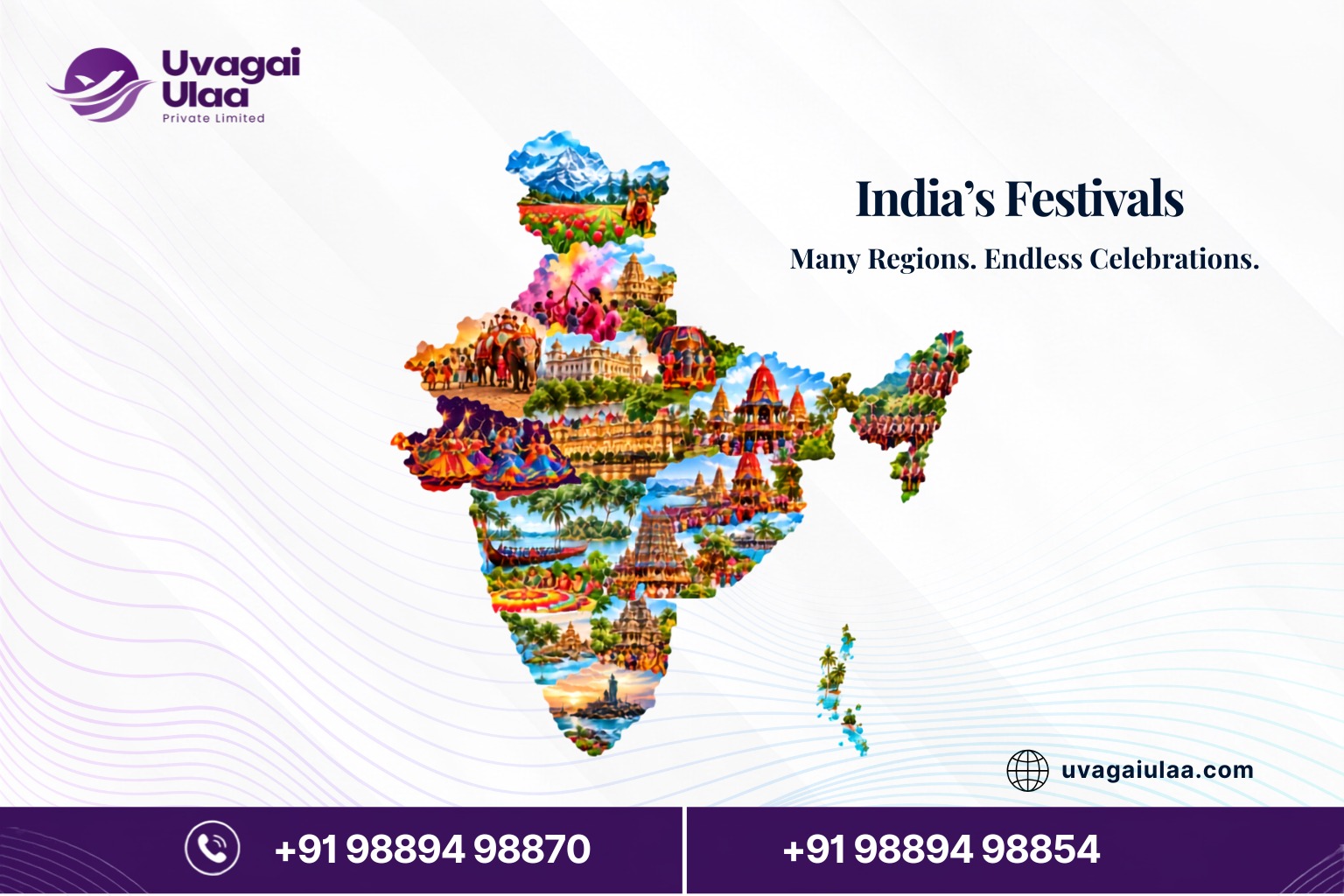
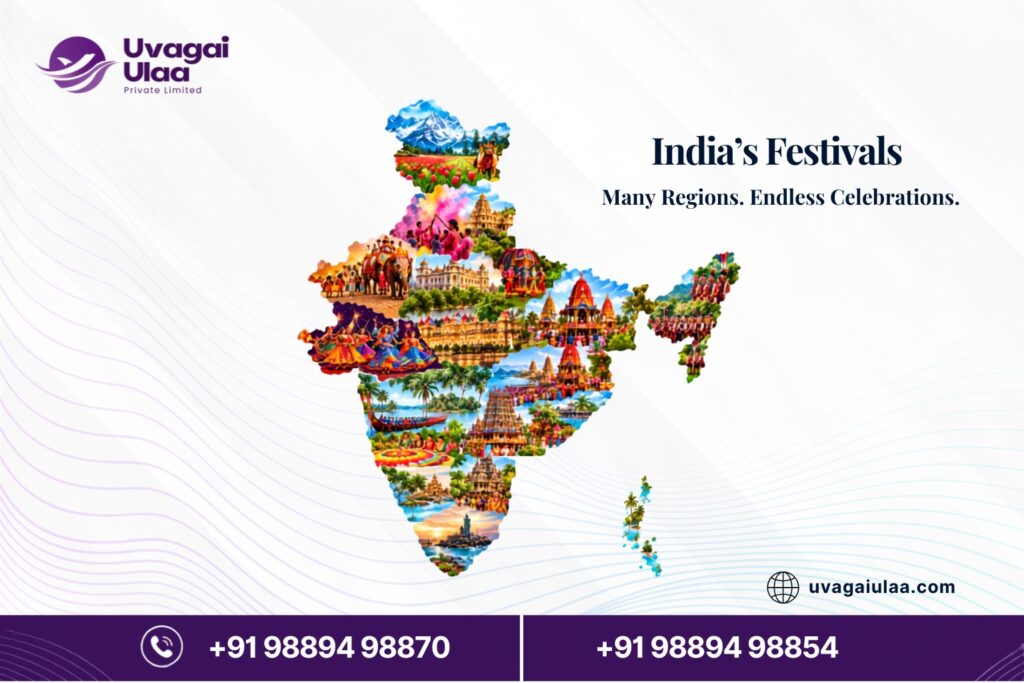
India is a land of festivals, where celebrations bring together history, faith, art, music and community traditions. Throughout the year, different regions come alive with temple festivals, harvest celebrations, religious occasions, colourful processions and cultural events.
For international travellers, experiencing India during a festival offers a chance to see the country beyond its monuments and landscapes. Each celebration reveals something about the people, traditions and history of the region.
Among India’s many celebrations, Tamil Nadu has a particularly rich and diverse festival culture. From ancient temple festivals and harvest celebrations to Christian and Islamic religious gatherings, the state reflects the many traditions that form part of its cultural identity.
Famous Festivals of Tamil Nadu
Pongal – The Harvest Festival
Pongal is one of Tamil Nadu’s most important festivals and celebrates the harvest, nature, farmers and cattle. The four-day celebration includes Bhogi, Thai Pongal, Mattu Pongal and Kaanum Pongal.
Homes are decorated with colourful kolams, sugarcane is enjoyed and Pongal is traditionally prepared in a new pot. When the milk boils over, it represents prosperity and abundance. Mattu Pongal honours cattle and their importance in agriculture, while Kaanum Pongal is a time for families and relatives to gather and spend time together. In some parts of Tamil Nadu, traditional events such as Jallikattu are also associated with the Pongal season.
Deepavali – One of India’s Major Festivals
Deepavali is one of India’s major and most widely celebrated festivals. Known as the Festival of Lights, it is celebrated across the country, with different regions following their own customs and traditions.
In Tamil Nadu, families traditionally wake up early, take an oil bath, wear new clothes, visit temples and spend time with relatives and friends. Sweets and savouries are prepared at home, including murukku, vadai, mixture, adhirasam and other traditional treats.
Fireworks and crackers have traditionally been a visible part of Deepavali celebrations, adding colour and excitement to the festive atmosphere. Homes, streets and markets become lively as people gather, shop and celebrate together.
Chithirai Festival – Madurai
The Chithirai Festival is one of Madurai’s most famous annual celebrations. Closely connected with the Meenakshi Amman Temple, the festival is known for its temple rituals, traditional processions and the celebrations associated with Meenakshi, Sundareswarar and Alagar.
The historic city becomes especially vibrant during this period, offering visitors an opportunity to experience Madurai’s temple traditions and cultural atmosphere.
Karthigai Deepam – Tiruvannamalai
Karthigai Deepam is one of Tamil Nadu’s most spectacular festivals of lights. It is particularly famous in Tiruvannamalai, where a large sacred flame is traditionally lit on Arunachala Hill.
Thousands of lamps are also lit in homes and temples. The combination of the temple, the hill and countless glowing lamps creates a memorable atmosphere.
Vaikunta Ekadasi – Srirangam
Vaikunta Ekadasi is an important Vaishnavite festival and is especially significant at Sri Ranganathaswamy Temple in Srirangam, near Tiruchirappalli.
One of the major highlights is the opening of the Sorga Vaasal, also known as the Paramapada Vaasal. Large numbers of devotees gather to take part in the special prayers and temple celebrations.
Thaipusam – A Festival of Devotion
Thaipusam is an important Tamil festival dedicated to Lord Murugan. Major Murugan temples across Tamil Nadu attract devotees, particularly destinations such as Palani.
The festival is known for temple processions, kavadi traditions and acts of devotion. It offers visitors a deeper understanding of the strong connection between Tamil culture, spirituality and temple traditions.
Ayudha Pooja and Vijayadashami
Ayudha Pooja is celebrated during the Navaratri season. Tools, machinery, vehicles, books and equipment used in daily life and work are cleaned, decorated and worshipped.
The following day, Vijayadashami is considered an auspicious occasion for new beginnings, education and learning. Many families choose this day to introduce children to education or begin a new activity.
Tamil Puthandu – Tamil New Year
Tamil Puthandu marks the beginning of the Tamil New Year. Families decorate their homes, prepare traditional food, visit temples and spend time together.
The festival reflects the importance of family, tradition and new beginnings in Tamil culture.
Santhana Koodu and Nagore Kandoori
Santhana Koodu festivals are associated with Muslim shrine traditions in Tamil Nadu. One of the best-known celebrations is Nagore Kandoori, connected with the Nagore Dargah near Nagapattinam.
The festival attracts devotees and visitors from different communities. Religious observances, processions and traditional practices form an important part of the celebrations, reflecting Tamil Nadu’s long history of diverse religious and cultural traditions.
Velankanni Festival
The annual feast at Velankanni is one of Tamil Nadu’s important Christian pilgrimage celebrations. It takes place at the Basilica of Our Lady of Good Health in Velankanni, Nagapattinam district.
Pilgrims and visitors from different parts of India and other countries gather for religious services, processions and devotional activities. The festival, centred around Annai Velankanni, represents an important part of Tamil Nadu’s Christian heritage.
Natyanjali Festival – Chidambaram
The Natyanjali Festival celebrates Indian classical dance and is associated with the Nataraja Temple in Chidambaram.
Classical dancers perform during the festival, bringing together dance, music, spirituality and temple heritage. It is an interesting cultural experience for travellers who want to explore Tamil Nadu beyond its famous tourist attractions.
Famous Festivals Across South India
Onam – Kerala
Onam is Kerala’s major harvest festival. Homes are decorated with colourful Pookalam flower designs, families gather for celebrations and traditional cultural programmes take place.
The festival is also known for the Onam Sadya, a traditional feast served on a banana leaf. Snake boat races held during the festive season are another major attraction in Kerala.
Mysuru Dasara – Karnataka
Mysuru Dasara is one of Karnataka’s most famous celebrations. During the festival, Mysuru Palace is illuminated and the city hosts cultural programmes and traditional events.
The grand Jumbo Savari procession is one of the major highlights and attracts visitors from across India and abroad.
Ugadi, Bathukamma and Bonalu
Ugadi marks the traditional New Year in Karnataka, Andhra Pradesh and Telangana.
Telangana is known for Bathukamma, a colourful floral festival where women create beautiful arrangements using seasonal flowers and gather for songs and celebrations. Bonalu is another important festival in Telangana, dedicated to Goddess Mahakali.
Famous Festivals of North India and Punjab
Holi – The Festival of Colours
Holi is one of India’s most internationally recognised festivals. People gather to celebrate with colours, music, dancing and festive food.
Mathura and Vrindavan are particularly famous for their distinctive Holi traditions, attracting visitors who want to experience the celebrations in places closely associated with Lord Krishna.
Janmashtami
Janmashtami celebrates the birth of Lord Krishna. Temples are decorated, devotional programmes are organised and communities gather for prayers and celebrations.
Mathura and Vrindavan are among the most significant destinations for experiencing Janmashtami.
Baisakhi and Lohri – Punjab
Baisakhi is an important harvest festival in Punjab and also holds great significance in Sikh history. Community celebrations, religious observances, Bhangra and Giddha bring the festival to life.
Lohri is another popular festival, especially associated with the winter harvest season. Families and communities gather around bonfires, sing traditional songs and celebrate together.
Famous Festivals of Rajasthan
Rajasthan’s festivals are known for their colourful clothing, folk music, traditional dance and royal heritage.
Gangaur is an important celebration dedicated to Goddess Gauri and is marked by traditional rituals and colourful processions.
Teej is associated with the monsoon season and includes traditional clothing, mehndi, songs, swings and processions. Jaipur is particularly known for its Teej celebrations.
The Pushkar Fair is one of Rajasthan’s best-known cultural events, combining traditional livestock trading with folk performances, crafts and local traditions. The Jaisalmer Desert Festival offers another memorable experience through folk music, dance and desert culture.
Festivals of Gujarat and Maharashtra
Navratri is one of Gujarat’s most famous festivals. For nine nights, people gather for Garba and Dandiya, creating an energetic atmosphere filled with music and dance.
Ganesh Chaturthi is one of Maharashtra’s biggest celebrations. Ganesha idols are installed in homes and public spaces, followed by prayers, cultural events and processions. Mumbai is especially famous for its grand celebrations.
Festivals of East India
Durga Puja is one of West Bengal’s largest and most important celebrations. Kolkata becomes filled with artistic pandals, beautifully designed idols, cultural programmes, music and community gatherings.
In Odisha, the Rath Yatra of Puri is one of India’s most famous chariot festivals. Large chariots carrying Lord Jagannath, Balabhadra and Subhadra are taken through the streets of Puri.
Festivals of Kashmir and Ladakh
The Tulip Festival in Srinagar celebrates spring when thousands of tulips bloom against the backdrop of the surrounding Himalayan landscape.
In Ladakh, the Hemis Festival is one of the region’s best-known cultural celebrations. Held at Hemis Monastery, it features traditional Buddhist masked dances, music and religious ceremonies.
Festivals of Northeast India
The Hornbill Festival in Nagaland showcases the traditions of the state’s different communities through music, dance, crafts, food and cultural performances.
Bihu is one of Assam’s most important festivals and is closely connected with the agricultural cycle. Rongali Bihu is particularly known for its music, dancing and lively celebrations.
Wangala in Meghalaya is an important harvest celebration of the Garo community and is known for its traditional drums, dance and cultural performances.
Experience India Through Its Festivals
India’s festivals reveal the remarkable diversity of its people and traditions. Tamil Nadu offers the harvest celebrations of Pongal, the lights and family traditions of Deepavali, the grandeur of Chithirai, the sacred flame of Karthigai Deepam, Vaikunta Ekadasi at Srirangam, Thaipusam, Ayudha Pooja, Santhana Koodu traditions and the Velankanni Festival.
Beyond Tamil Nadu, travellers can experience Onam in Kerala, Mysuru Dasara in Karnataka, Holi and Janmashtami in North India, Baisakhi and Lohri in Punjab, colourful festivals in Rajasthan, Garba nights in Gujarat, Ganesh Chaturthi in Maharashtra, Durga Puja in West Bengal and distinctive cultural celebrations across Kashmir, Ladakh and the Northeast.
Each festival offers a different way to understand India. A journey during the festive season allows travellers to witness traditions that are not displayed only for visitors, but are part of the everyday cultural life of communities.
Conclusion
Every Festival Tells the Story of a Place
India’s festivals are more than celebrations. They are expressions of history, faith, agriculture, art, music, family and community.
From the streets of Tamil Nadu during Pongal and Deepavali to the colourful celebrations of Holi, the royal traditions of Rajasthan, the dance-filled nights of Navratri and the cultural gatherings of the Northeast, every region has its own story to tell.
For travellers, experiencing these festivals is an opportunity to see India at its most vibrant and meaningful.
India is not just a country to travel through. It is a place to experience through its people, traditions, celebrations and unforgettable stories.