
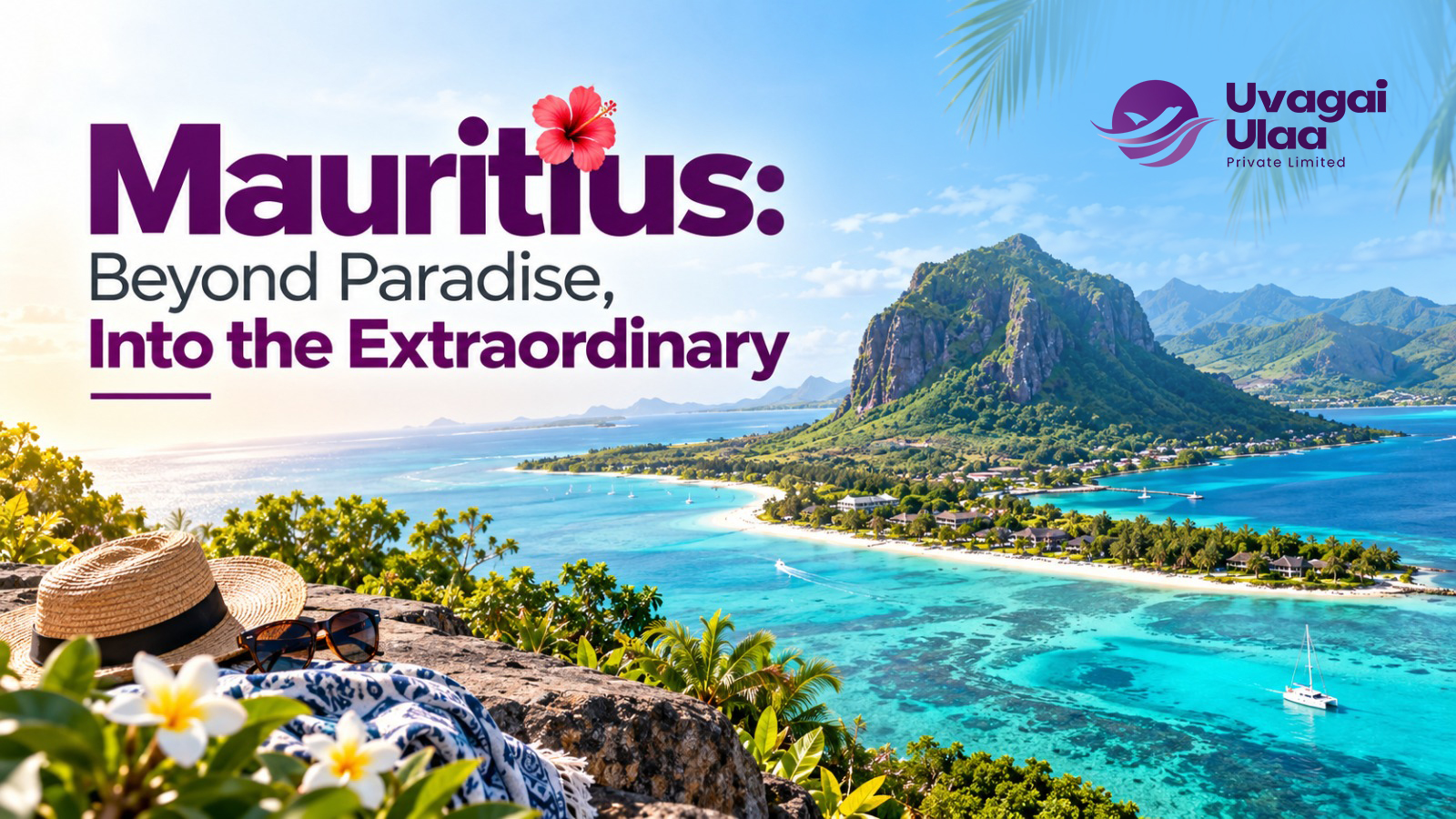
Mauritius: Beyond Paradise, Into the Extraordinary
Mauritius is best known for its postcard beaches, but its real character lies well beyond the shoreline. Born from volcanic activity and shaped by centuries of migration, trade, and colonial history, the island has grown into a rich blend of cultures, traditions, and landscapes. From the lively streets of Port Louis to the dramatic peaks of Le Morne, each region tells a distinct story. A journey through Mauritius is not simply a beach holiday; it is an opportunity to explore history, nature, and culture in a single trip.
Port Louis: Where Mauritius’ History Comes Alive
The capital city is the natural starting point for understanding Mauritius. Port Louis brings together colonial heritage, colourful markets, religious landmarks, and modern city life in a compact, walkable centre.
Must-visit highlights:
- Aapravasi Ghat, a UNESCO World Heritage Site connected to the history of Indian indentured labour
- Citadel Fort Adelaide, a historic fort with panoramic views across the city and harbour
- Central Market, a lively spot for local food, spices, and fresh produce
- Caudan Waterfront, a popular destination for shopping and dining
- Jummah Mosque, one of the city’s important religious landmarks
The North: Gardens, Sugar Heritage and Coastal Charm
Northern Mauritius combines tropical gardens, historic estates, and lively coastal towns. The Pamplemousses Botanical Garden, one of the island’s most celebrated attractions, is home to giant water lilies and peaceful tropical pathways. At L’Aventure du Sucre, visitors can trace how sugar shaped the island’s economy, while Domaine de Labourdonnais offers a window into plantation-era Mauritius through its historic estate and gardens.
Must-visit highlights:
- Pamplemousses Botanical Garden
- L’Aventure du Sucre
- Grand Baie
- Cap Malheureux
- Domaine de Labourdonnais
Grand Baie suits travellers looking for dining, shopping, and water activities, while Cap Malheureux offers a quieter coastal atmosphere with views of the northern islands.
The Central Highlands: Discover Mauritius’ Volcanic Soul
The central highlands reveal another side of the island through volcanic landscapes and historic estates. At Trou aux Cerfs, a dormant volcanic crater near Curepipe, visitors can take in sweeping views across the central plateau. The region is also home to Le Pouce Mountain and Pieter Both Mountain, two of Mauritius’ most recognisable peaks, while Eureka House near Moka preserves a beautifully restored Creole mansion surrounded by gardens and waterfalls.
Must-visit highlights:
- Trou aux Cerfs
- Eureka House
- Le Pouce Mountain
- Pieter Both Mountain
- Curepipe
The East Coast: Turquoise Lagoons and Island Escapes
The eastern coast showcases the tropical beauty Mauritius is famous for, with calm lagoons and offshore islands. The highlight is Île aux Cerfs, a popular escape for boat trips, swimming, and water sports against spectacular lagoon scenery. For a more local experience, Flacq Market offers colourful stalls of fresh produce and everyday Mauritian life.
Must-visit highlights:
- Île aux Cerfs
- Flacq Market
- Belle Mare
- Trou d’Eau Douce
- East Coast lagoons
The South: Where Heritage Meets Nature
Southern Mauritius carries a more rugged, traditional character, ideal for discovering the island’s maritime history and plantation heritage. Mahébourg is one of the island’s most historic towns, and its Historical Naval Museum recounts the Battle of Grand Port and Mauritius’ role along Indian Ocean trade routes. Nearby, the Rault Biscuit Factory introduces visitors to traditional cassava biscuits, while Bois Chéri offers insight into the island’s long tea-growing tradition.
Must-visit highlights:
- Mahébourg
- Historical Naval Museum
- Vieux Grand Port
- Rault Biscuit Factory
- Bois Chéri Tea Plantation
- Domaine de Saint Aubin
Grand Bassin: Sacred Waters in a Volcanic Crater
Set among the central mountains, Grand Bassin, also known as Ganga Talao, is one of Mauritius’ most significant cultural and spiritual landmarks. The sacred lake sits within a volcanic crater and serves as an important pilgrimage destination for the island’s Hindu community. Temples and religious monuments around the lake create a setting where faith, culture, and nature come together, and the site draws particular resonance for travellers from India, given the shared spiritual heritage.
The West: Forests, Waterfalls and Extraordinary Landscapes
Western Mauritius offers some of the island’s most dramatic natural scenery. Black River Gorges National Park is a protected area of forests, hiking trails, and waterfalls, home to native wildlife rarely seen elsewhere on the island. Further south, Chamarel presents one of Mauritius’ most unusual landscapes: the Seven Coloured Earth, naturally formed layers of contrasting colour, alongside the nearby Chamarel Waterfall.
Must-visit highlights:
- Black River Gorges National Park
- Chamarel Seven Coloured Earth
- Chamarel Waterfall
- Tamarin
- Albion Lighthouse
- Île aux Bénitiers
- Crystal Rock
Le Morne: A Mountain That Tells a Story
Rising dramatically from the southwestern peninsula, Le Morne Brabant is one of Mauritius’ most iconic landmarks. The Le Morne Cultural Landscape is a UNESCO World Heritage Site and an important symbol of freedom and resistance, having once provided refuge for escaped enslaved people. Today, visitors come for its hiking trails and breathtaking views across the surrounding lagoon.
The Underwater Waterfall
One of Mauritius’ most extraordinary sights lies just offshore: the famous Le Morne Underwater Waterfall. Despite its appearance, it is not a literal waterfall but a striking optical illusion created by the movement of sand and silt through ocean currents. Seen from above, the turquoise water appears to cascade into the depths, making it one of the island’s most photographed natural sights.
Mauritius in One Journey
From historic Port Louis and peaceful Grand Bassin to the colourful landscapes of Chamarel, the lagoons of Île aux Cerfs, and the dramatic beauty of Le Morne, Mauritius offers far more than a beach escape. It is a journey through history, culture, and extraordinary nature, and mapping that journey well matters as much as the destination itself.
Fitting this many regions into a single trip, coordinating inter-island transfers, timing the lagoon visits around tides, and knowing which heritage sites genuinely merit a detour, is exactly where working with an experienced travel partner makes the difference between a rushed itinerary and a well-paced one. For travellers planning their Mauritius journey from Trichy, that kind of on-ground planning experience is something we have built our practice around at Uvagai Ulaa, helping travellers sequence a trip that captures the island’s full range rather than just its coastline.